
← Back to news
September 1, 2026
Sargassum Has an Image Problem
Frode Sønstebø
Sargassum may be known as a costly problem across the Caribbean, but beneath its appearance lies a potentially valuable resource for agriculture, materials, cosmetics, biotechnology and more.
Let’s be fair. Sargassum has a serious image problem.
When tons of it wash ashore across the Caribbean, nobody is standing on the beach saying, “Wow, what a beautiful natural resource.”
It smells. It piles up. It affects tourism, coastal communities and marine ecosystems. Hotels and governments spend millions trying to collect it and get rid of it.
Kelp, meanwhile, gets all the good PR.
Kelp is sustainable. Kelp is regenerative. Kelp is cool.
Sargassum? Not so much.
But maybe we’ve been judging it a little too much by its appearance.
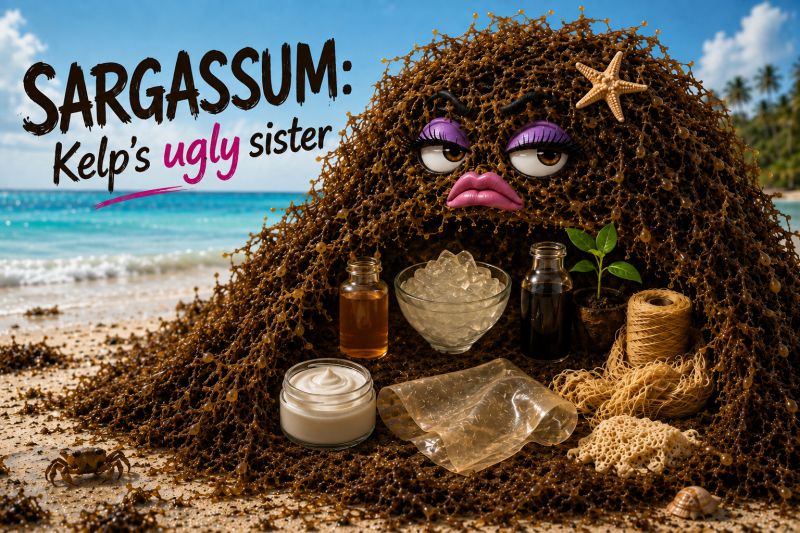
Because inside that brown, unwanted biomass are compounds and materials with real potential: alginates, fucoidan, cellulose, minerals and other valuable components, with applications across agriculture, materials, cosmetics and biotechnology.
And that is before considering the potential value of simply turning a costly waste problem into a useful raw material.
At Thalasso AS, we don’t look at a pile of sargassum and just see something that needs to be removed.
We see feedstock.
We see resources.
We see what could become the blue gold of the Caribbean.
So perhaps sargassum deserves a slightly better reputation.
It’s not what’s on the outside that matters. It’s what’s on the inside.